

Bowel Obstruction - Advanced Diagnosis & Treatment
Bowel Obstruction (Intestinal Obstruction)
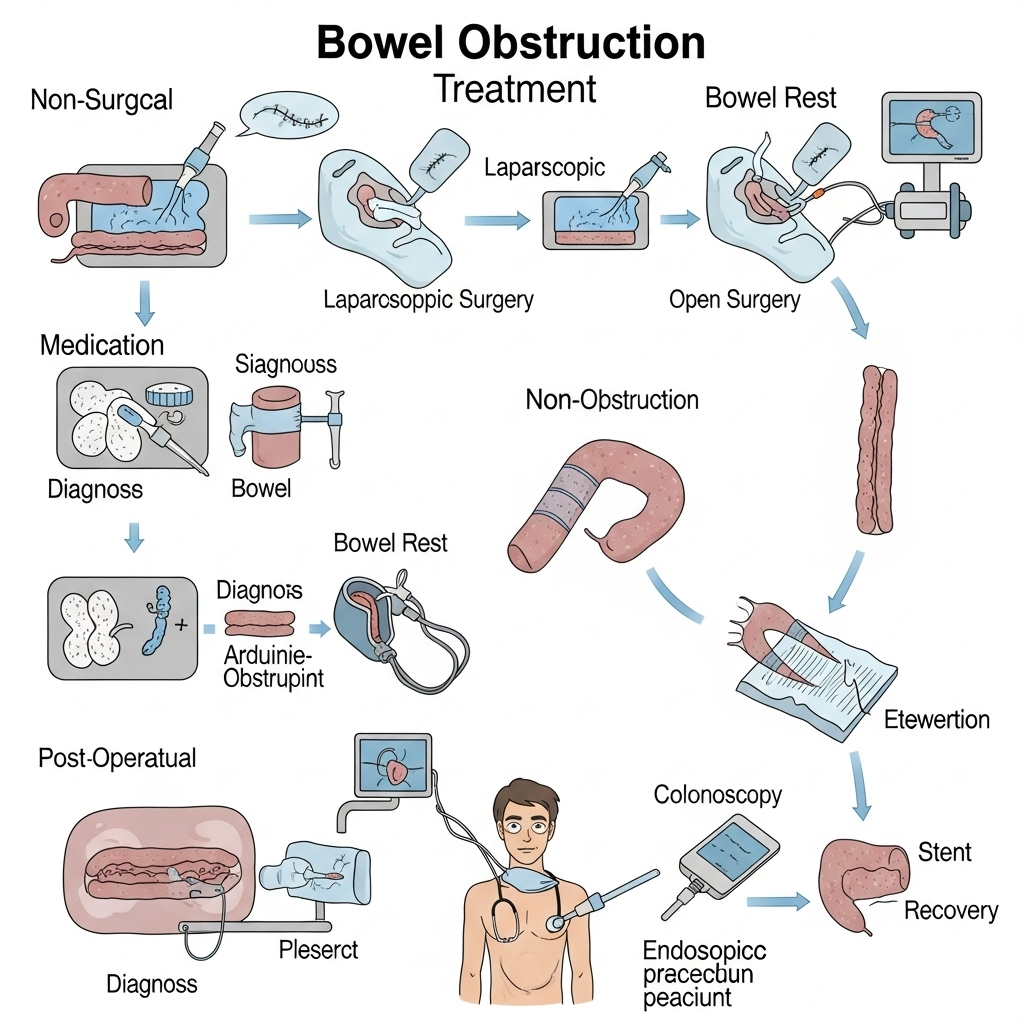
Understanding and Treating Bowel Obstruction
Bowel obstruction, also known as intestinal obstruction, is a serious medical condition where there is a partial or complete blockage in the small or large intestine. This blockage prevents food, fluids, and gas from passing through, leading to a build-up that can cause severe symptoms and, if left untreated, life-threatening complications.
Types of Bowel Obstruction:
Bowel obstructions can be categorized based on their location and nature:
- Small Bowel Obstruction (SBO): More common, affecting the small intestine.
- Large Bowel Obstruction (LBO): Less common, affecting the large intestine (colon).
- Partial Obstruction: Some food and fluid can still pass through.
- Complete Obstruction: Nothing can pass through. This is a medical emergency.
- Mechanical Obstruction: A physical barrier blocks the intestine (e.g., adhesions, tumors).
- Pseudo-obstruction (Paralytic Ileus): No physical blockage exists, but the bowel muscles and nerves aren't working properly, leading to impaired movement.
Common Causes:
The causes vary depending on whether it's a small or large bowel obstruction and its type:
Causes of Mechanical Obstruction:
- Adhesions: Bands of scar tissue that form in the abdomen after previous surgery, being the most common cause of SBO.
- Hernias: A part of the intestine protrudes through a weakened area of the abdominal wall.
- Tumors: Benign or malignant growths within the intestine or pressing on it from outside.
- Inflammatory Bowel Disease (IBD): Conditions like Crohn's disease can cause strictures (narrowing) of the intestine.
- Diverticulitis: Inflammation of small pouches in the colon, which can lead to strictures.
- Volvulus: Twisting of a loop of the intestine, often in the large bowel.
- Intussusception: One part of the intestine telescopes into another, more common in children.
- Impacted Feces: Severe constipation can cause a blockage, especially in the elderly.
Causes of Pseudo-obstruction (Paralytic Ileus):
- Abdominal surgery (common after effects)
- Infections (e.g., peritonitis, appendicitis)
- Certain medications (e.g., opioids, anticholinergics)
- Neurological disorders (e.g., Parkinson's disease)
- Systemic illnesses (e.g., kidney failure, heart attack)
Symptoms of Bowel Obstruction:
Symptoms can develop rapidly or gradually and include:
- Severe, crampy abdominal pain that may come and go
- Nausea and vomiting (vomit may contain bile or even fecal matter in severe cases)
- Abdominal distension (swelling)
- Inability to pass gas or stool (constipation), although partial obstruction may cause diarrhea initially
- Loss of appetite
- Dehydration
It's crucial to seek immediate medical attention if you experience these symptoms, as a complete obstruction can lead to life-threatening complications like bowel perforation or tissue death.
Diagnosis:
Dr. kshitiz saranwill typically diagnose bowel obstruction through a combination of:
- Physical Examination: Assessing abdominal tenderness, distension, and listening for bowel sounds.
- Medical History: Discussing symptoms, previous surgeries, and medical conditions.
- Imaging Tests:
- Abdominal X-ray: Can show dilated loops of bowel and air-fluid levels.
- CT Scan (Computed Tomography): The most common and accurate test to locate the obstruction, identify its cause, and check for complications.
- MRI (Magnetic Resonance Imaging): Can be used in specific cases, especially for soft tissue visualization.
- Barium Enema or Small Bowel Follow-Through: Less common now, but may be used in certain situations to visualize the bowel.
- Blood Tests: To check for dehydration, electrolyte imbalances, and signs of infection.
Treatment and Management:
Treatment for bowel obstruction depends on the type, location, and severity of the blockage. Dr. kshitiz saran provides comprehensive management, which may include:
- Conservative Management:
- Hospitalization: Often required for close monitoring.
- NPO (Nil Per Os): No food or drink by mouth to rest the bowel.
- Intravenous (IV) Fluids: To prevent dehydration and correct electrolyte imbalances.
- Nasogastric (NG) Tube: A tube inserted through the nose into the stomach to decompress the bowel and relieve vomiting and distension.
- Pain Management: Medications to control abdominal pain.
- Endoscopic Interventions:
- Colonoscopic Decompression: For some large bowel obstructions, a colonoscope can be used to relieve pressure.
- Stent Placement: In cases of malignant (cancerous) obstructions, an endoscopic stent can be placed to keep the bowel open, often as a palliative measure.
- Balloon Dilation: For certain benign strictures, endoscopic balloon dilation can widen the narrowed area.
- Surgical Intervention:
- Emergency Surgery: Often necessary for complete obstructions, especially those involving strangulation (blood supply cut off), which can lead to tissue death and perforation.
- Lysis of Adhesions: Surgically cutting scar tissue causing the blockage.
- Resection: Removing the blocked or damaged section of the bowel and rejoining the healthy ends.
- Hernia Repair: Correcting a hernia that is causing the obstruction.
- Tumor Removal: Excising tumors that are blocking the intestine.
- Addressing Underlying Causes: Treating conditions like inflammatory bowel disease, or managing medications causing paralytic ileus.